PENGEMBANGAN GAME KUBISA KAPITA SELEKTA UNTUK MENINGKATKAN PEMAHAMAN KONSEP DAN KETERAMPILAN APLIKATIF
DOI:
https://doi.org/10.31100/histogram.v9i2.4296Kata Kunci:
Game Edukasi, Aljabar Geometrik, Kubus, Pemahaman Konsep, Keterampilan AplikatifAbstrak
ABSTRAK
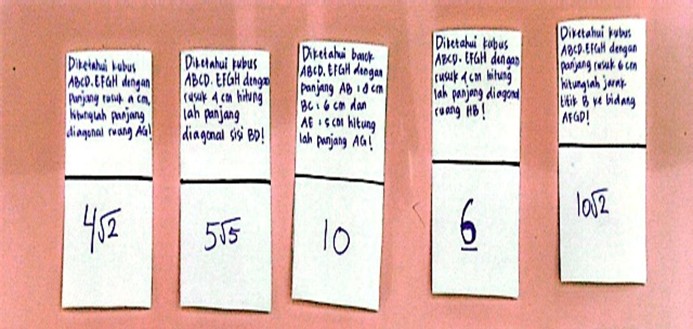
Matematika dapat menjadi dasar dalam berkembangnya teknologi modern dan dapat mendorong perkembangan pemikiran mahasiswa, dengan pembelajaran matematika diharapkan mampu memiliki memahami konsep dan pemahaman aplikatif sehingga membuat mahasiswa mampu berpikir yang kompetitif sehingga diperlukan pengembangan game edukasi kubisa yang arahnya pada materi Kubus. Model pengembangan yang digunakan dalam penelitian ini yaitu menggunakan model penelitian pengembangan (R&D). Setelah dilaksanakannya pengembangan, maka dilaksanakan uji coba terlebih dahulu kepada mahasiswa seperti uji keterbacaan dan uji game dengan tahap-tahap pengembangan yaitu mendefinisikan terlebih dahulu kebutuhan dilapangan, kemudian merancang instrumen game yang akan digunakan dan proses pembuatan game Kubisa berbasis Aljabar Geometrik pada materi Kubus. Secara statistik, nilai t-stat adalah -15,03 dan nilai -p jauh dibawah 0,05, hal ini menunjukkan bahwa perbedaan antara hasil pretes dan postest signifikan secara statistic. Hasil analisis angket, angket kepuasan digunakan guna mengetahui respon mahasiswa terhadap media pembelajaran game Kubisa matematika pada mata kuliah kapita selekta pendidikan matematika. Sebanyak 54% mahasiswa menilai metode ini dalam kategori baik, dan 46% lainnya menilai dalam kategori sangat baik. Hal ini menunjukkan bahwa game kubisa matematika dapat diterima oleh mahasiswa dengan sangat baik.
ABSTRACT
Mathematics serves as a foundation for the development of modern technology and encourages students' cognitive growth. Through mathematics learning, students are expected to understand concepts and apply them effectively, enabling them to think competitively. Therefore, this study aims to develop an educational game called Kubisa, focusing on the topic of cubes. The development model employed in this research is the Research and Development (R&D) approach. After the development process, trials were conducted with students, including readability and game tests. The development stages involved defining field needs, designing the game instruments, and creating the Kubisa game based on geometric algebra concepts related to cubes. Statistically, the t-value was -15.03 with a p-value far below 0.05, indicating a significant difference between the pretest and posttest results. A satisfaction questionnaire was administered to assess students' responses toward the Kubisa math game used in the Mathematics Education Capita Selecta course. The results showed that 54% of students rated the method as good, and 46% rated it as very good, indicating that students received the Kubisa mathematics game very well.
Unduhan
Referensi
Apriadi, H. (2021). Video Animasi Matematika dengan Pendekatan Kontekstual untuk Meningkatkan Pemahaman Konsep Matematika. JNPM (Jurnal Nasional Pendidikan Matematika), 5(1), 173. https://doi.org/10.33603/jnpm.v5i1.3621
Dasmasela, J., Urath, S., & Nifanngelyau, J. (2021). Etnomatematika Seni Rupa Patung Tumbur. Jurnal Pendidikan Indonesia, 2(1), 36–47. https://doi.org/10.59141/japendi.v2i01.83
Dores, O. J., Huda, F. A., & Riana, R. (2019). Analisis Minat Belajar Matematika Siswa Kelas IV Sekolah Dasar Negeri 4 Sirang Setambang Tahun Pelajaran 2018/2019. J-PiMat Jurnal Pendidikan Matematika, 1(1). https://doi.org/10.31932/j-pimat.v1i1.408
Handayani, P. V., Sukayasa, S., Ismaimuza, D., & Meinarn, W. (2024). Pemahaman Konsep Siswa dalam Menyelesaikan Soal Kubus Ditinjau dari Level Van Hiele. Histogram: Jurnal Pendidikan Matematika, 8(1), 113–126. https://journal.matappa.ac.id/index.php/histogram/article/view/3448/1638
Hasanah, N., & Ambarsari, I. F. (2022). Pengaruh Metode Kuis Menggunakan Aplikasi Quizizz dan Ice Braking terhadap Motivasi Belajar pada Materi Sistem Persamaan Linear Tiga Variabel. Jurnal Pendidikan dan Kewirausahaan, 10(3), 1133–1142. https://doi.org/10.47668/pkwu.v10i3.628
Hasanah, N., Ambarsari, I. F., Surur, M., Darmawati, E. S., & Rakhman, F. (2022). Training Motivasi Belajar Matematika Berbasis Thinking Smart Game pada Siswa MI Multiple Sarina. Journal of Community Empowerment and Innovation 1(2), 62–68. https://doi.org/10.47668/join.v1i2.557
Islamiah, I. D. (2019). Pengaruh Minat Belajar Siswa terhadap Prestasi Belajar Matematika di SMKN 1 Cihampelas. Journal on Education, 1(2), 451–457. https://doi.org/10.31004/joe.v1i2.91
Kasi, R. (2023). Pembelajaran Aktif: Mendorong Partisipasi Siswa. https://osf.io/preprints/osf/f6d7x_v1
Krisbiantoro, D., & Haryono, D. (2017). Game Matematika sebagai Upaya Peningkatan Pemahaman Matematika Siswa Sekolah Dasar. Jurnal Telematika, 10(2), 255–256. https://ejournal.amikompurwokerto.ac.id/index.php/telematika/article/viewFile/528/pdf
Ndraha, I. S., Mendrofa, R. N., & Lase, R. (2022). Analisis Hubungan Minat Belajar dengan Hasil Belajar Matematika. Educativo: Jurnal Pendidikan, 1(2), 672–681. https://doi.org/10.56248/educativo.v1i2.92
Putra, L. D., Arlinsyah, N. D., Ridho, F. R., Syafiqa, A. N., & Annisa, K. (2024). Pemanfaatan Wordwall pada Model Game Based Learning terhadap Digitalisasi Pendidikan Sekolah Dasar. Jurnal Dimensi Pendidikan dan Pembelajaran, 12(1), 81–95. https://doi.org/10.24269/dpp.v12i1.8749
Putri, R. M., Wanabuliandari, S., & Fardani, M. A. (2022). Analisis Faktor yang Mempengaruhi Kurangnya Minat Belajar Matematika Siswa Kelas IV MI Tarbiyatul Islamiyah di Desa Winong. Seminar Nasional Pendidikan Matematika (SNAPMAT). https://conference.umk.ac.id/index.php/snapmat/article/view/177
Safitri, I., & Suryani, S. D. (2023). Menigkatkan Minat Berhitung melalui Game Matematika pada Siswa Kelas VI SDN 76 Bengkulu Tengah. JIMAKUKERTA: Jurnal Ilmiah Mahasiswa Kuliah Kerja Nyata, 3(3), 128–133. https://doi.org/10.36085/jimakukerta.v3i3.6073
Siswondo, R., & Agustina, L. (2021). Penerapan Strategi Pembelajaran Ekspositori untuk Mencapai Tujuan Pembelajaran Matematika. Himpunan: Jurnal Ilmiah Mahasiswa Pendidikan Matematika, 1(1), 33–40. https://jim.unindra.ac.id/index.php/himpunan/article/view/3155
Syafitri, A., Sinaga, M., Saragih, C. S., Wulandari, D. H., Hasratuddin, H., & Barus, R. A. (2024). Meningkatkan Pemahaman Konsep Pecahan melalui Pendekatan STEAM pada Siswa Kelas IV Sekolah Dasar. Histogram: Jurnal Pendidikan Matematika, 8(1), 221–230. https://journal.matappa.ac.id/index.php/histogram/article/view/3426/1647
Tambunan, P. K., Pertiwi, C., Wicaksono, R. S., Wahyudi, D., & Simamora, V. (2023). Penerapan Metode Mind Mapping dalam Meningkatkan Kreativitas Belajar Siswa Penabur. Jurnal Pendidikan Indonesia, 4(2), 205–214. https://doi.org/10.59141/japendi.v4i02.1613
Ulfa, U., Anggraini, A., Sugita, G., & Murdiana, I. N. (2024). Profil Kemampuan Pemahaman Konsep Siswa Berdasarkan Gaya Belajar. Histogram: Jurnal Pendidikan Matematika, 8(2), 86–103. https://journal.matappa.ac.id/index.php/histogram/article/view/3704/1721
Winatha, K. R., & Setiawan, I. M. D. (2020). Pengaruh Game-Based Learning terhadap Motivasi dan Prestasi Belajar. Scholaria: Jurnal Pendidikan dan Kebudayaan, 10(3), 198–206. https://doi.org/10.24246/j.js.2020.v10.i3.p198-206
Unduhan
Diterbitkan
Terbitan
Bagian
Lisensi
Hak Cipta (c) 2025 Nur Hasanah, Ida Fitriana Ambarsari, Tri Astindari, Nafidatun Nikmah, Romlah

Artikel ini berlisensi Creative Commons Attribution-NonCommercial-NoDerivatives 4.0 International License.
Please find the rights and licenses in Histogram: Jurnal Pendidikan Matematika. By submitting the article/manuscript, the author(s) accept this policy.
1. License
The non-commercial use of the article will be governed by the Creative Commons Attribution license as currently displayed on Creative Commons Attribution-ShareAlike 4.0 International.
2. Author's Warranties
The author warrants that the article is original, written by a stated author(s), has not been published before, contains no unlawful statements, does not infringe the rights of others, is subject to copyright that is vested exclusively in the author and free of any third party rights, and that any necessary written permissions to quote from other sources have been obtained by the author(s).
3. User Rights
Histogram: Jurnal Pendidikan Matematika's spirit is to disseminate articles published for free. Under the Creative Commons license, Histogram: Jurnal Pendidikan Matematika permits users to copy, distribute, display, and perform the work for non-commercial purposes only. Users will also need to attribute authors and Histogram: Jurnal Pendidikan Matematika when distributing works in the journal.
4. Rights of Authors
Authors retain all their rights to the published works, such as (but not limited to) the following rights;
- Copyright and other proprietary rights relating to the article, such as patent rights,
- The right to use the substance of the article in one's future works, including lectures and books,
- The right to reproduce the article for one's purposes,
- The right to self-archive the article,
- The right to enter into separate, additional contractual arrangements for the non-exclusive distribution of the article's published version (e.g., post it to an institutional repository or publish it in a book), with an acknowledgment of its initial publication in this journal (Histogram: Jurnal Pendidikan Matematika).
5. Co-Authorship
If other authors jointly prepared the article, any author submitting the manuscript warrants that all co-authors have authorized them to agree on this copyright and license notice (agreement) on their behalf and agree to inform their co-authors of the terms of this policy. Histogram: Jurnal Pendidikan Matematika will not be held liable for anything arising from the author(s) internal dispute. Histogram: Jurnal Pendidikan Matematika will only communicate with the corresponding author.
6. Royalties
This agreement entitles the author to no royalties or other fees. To such an extent that it is legally permissible, the author waives their right to collect royalties relative to the article regarding any use by Histogram: Jurnal Pendidikan Matematika.
7. Miscellaneous
Histogram: Jurnal Pendidikan Matematika will publish the article (or have it published) in the journal if the editorial process is completed. Histogram: Jurnal Pendidikan Matematika h editors may modify the article to a style of punctuation, spelling, capitalization, referencing, and usage that deems appropriate. The author acknowledges that the article may be published to be publicly accessible, and such access will be free of charge for the readers, as mentioned in point 3.